Fabric
GSM Explained: Fabric Weight Guide for T-Shirts, Hoodies and Sweatshirts
By the TrueThreads factory team · Updated · 6 min read
Short answer
GSM stands for grams per square metre and measures how heavy a fabric is. For streetwear, heavyweight T-shirts are usually 240–320 GSM, while heavyweight hoodies and sweatshirts are usually 350–500 GSM. Higher GSM gives a thicker, more structured garment, but yarn quality, knit and finishing matter as much as weight.
Key takeaways
- GSM = grams per square metre; it measures weight, not quality.
- Tees: 140–180 GSM is light, 180–220 mid, 240–320 heavyweight.
- Hoodies and sweatshirts: 280–340 GSM is mid-weight, 350–500 heavyweight.
- To convert GSM to oz/yd², divide by 33.9.
- Combed or compact cotton, tight knitting and garment washing decide how a heavy fabric feels and lasts.
What GSM means
GSM (grams per square metre) is the weight of one square metre of fabric. A 240 GSM jersey weighs 240 grams per square metre. Brands in the United States often quote ounces per square yard instead; one ounce per square yard is about 33.9 GSM.
GSM for T-shirts
| Weight class | GSM | Typical use |
|---|---|---|
| Lightweight | 140–180 | Summer tees, promotional and fashion basics |
| Mid-weight | 180–220 | Everyday premium tees |
| Heavyweight | 240–280 | Classic streetwear drape, boxy and oversized fits |
| Extra heavyweight | 300–320 | Very structured boxy tees that hold their shape |
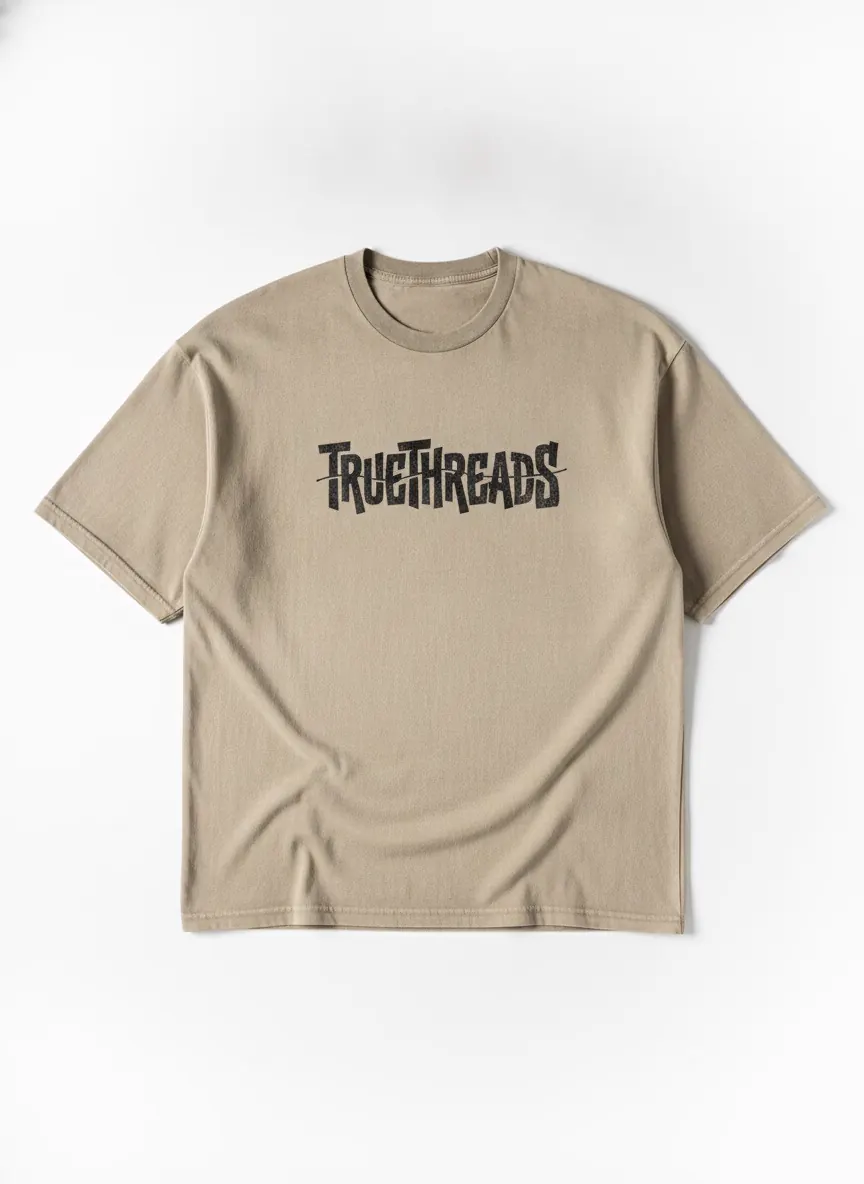
For boxy and oversized streetwear silhouettes, 240 and 280 GSM are the most common choices; 300–320 GSM gives a stiffer, more architectural hang. TrueThreads produces heavyweight tees from 240 to 320 GSM in 100% cotton.
GSM for hoodies and sweatshirts
| Weight class | GSM | Typical use |
|---|---|---|
| Lightweight | 240–280 | Layering pieces and warm climates |
| Mid-weight | 280–340 | Standard retail hoodies |
| Heavyweight | 350–450 | Premium streetwear hoodies and crewnecks |
| Extra heavyweight | 450–500 | Statement pieces with a dense, structured feel |
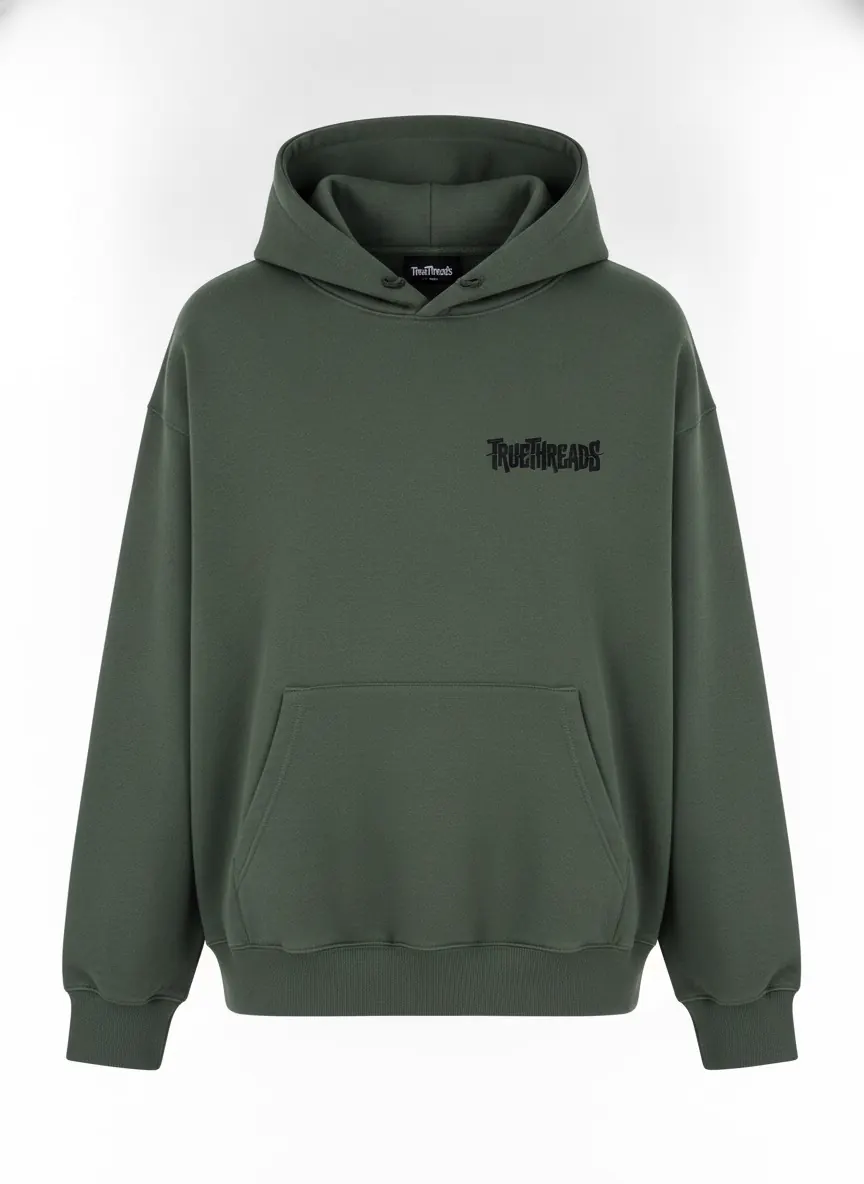
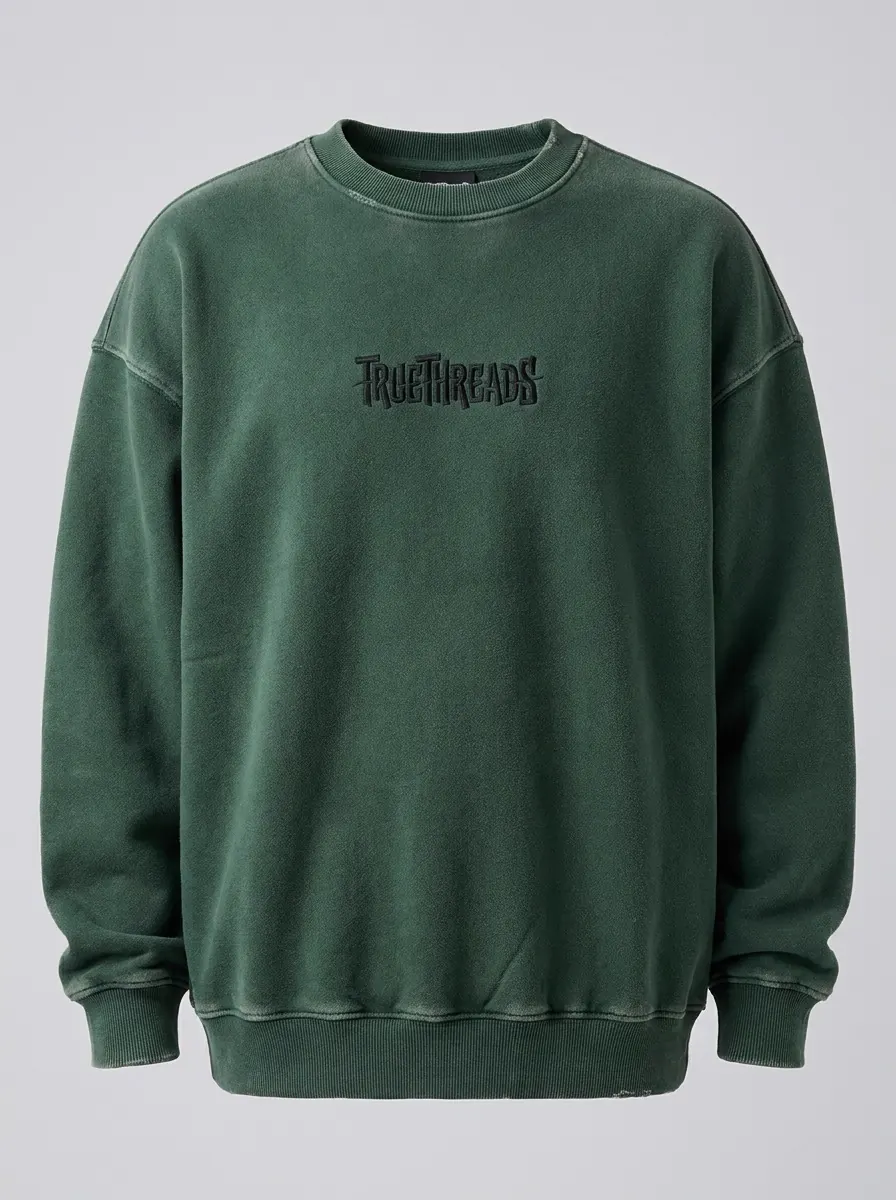
Two constructions dominate. French terry has loops on the inside and a cleaner, slightly lighter feel. Brushed fleece has those loops brushed into a soft, warm pile. Both are available in heavy weights; see French terry hoodies and crewneck sweatshirts, which TrueThreads makes from 350 to 500 GSM.
GSM to oz conversion table
| GSM | oz/yd² (approx.) |
|---|---|
| 180 | 5.3 |
| 240 | 7.1 |
| 280 | 8.3 |
| 320 | 9.4 |
| 350 | 10.3 |
| 400 | 11.8 |
| 450 | 13.3 |
| 500 | 14.7 |
Why GSM alone is not quality
- Yarn — combed and compact cotton has fewer loose fibres, so it pills less and feels smoother than carded cotton of the same weight.
- Knit density — a tightly knitted 240 GSM jersey can feel more substantial than a loose 280 GSM one.
- Finishing — enzyme washing, garment dyeing and pre-shrinking change hand-feel and reduce shrinkage after the customer's first wash.
- Construction — rib quality at the collar, twin-needle hems and shoulder taping decide whether a heavy tee keeps its shape.
Frequently asked questions
- What GSM is a heavyweight T-shirt?
- A heavyweight T-shirt is generally 240 GSM or more. Streetwear brands most often use 240–280 GSM, with 300–320 GSM for very structured boxy fits.
- What GSM is best for hoodies?
- Premium streetwear hoodies are usually 350–450 GSM. 280–340 GSM is a standard retail weight, and 450–500 GSM gives a very dense, heavy feel.
- How do I convert GSM to oz?
- Divide GSM by 33.9 to get ounces per square yard. For example, 240 GSM is about 7.1 oz/yd² and 400 GSM is about 11.8 oz/yd².
- Is higher GSM always better quality?
- No. GSM measures weight only. Yarn quality, knit density, finishing and construction have as much effect on durability and feel as fabric weight.
Get a factory quote in 24 hours
MOQ 30–50 pieces per style · Samples in 7–10 days via DHL · No commitment.
Request a quote